

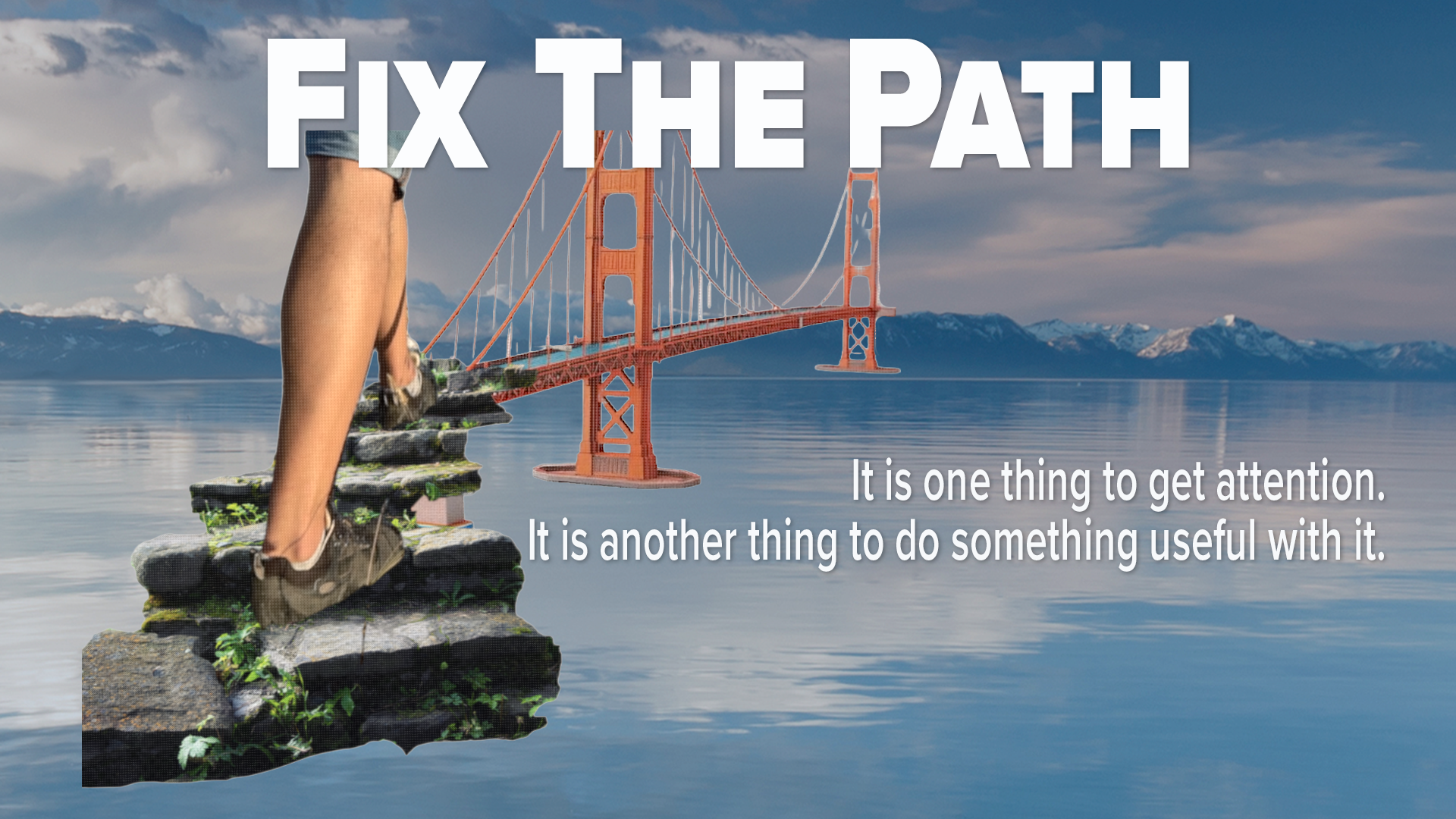
That is the problem I see over and over in digital marketing. Businesses work hard to get into the feed, into search, into the inbox, or into the ad stream. They do the work to get noticed. They get the click.
And then the click lands in confusion.
The homepage is vague.
The mobile experience is clunky.
The message does not match the ad.
The offer is hard to find.
The photos are stale.
The next step is unclear.
And just like that, the value starts to disappear.
That is why this part of digital marketing matters so much, especially right now.
People are already looking ahead to summer. They are searching, comparing, scrolling, checking websites, and building a sense of what feels worth their time. That part starts long before they ever get here.
And when they do click, they are asking a very simple question:
Does this feel easy, clear, and worth it?
If the answer is no, even for a second, attention is wasted.
This is where a lot of businesses lose momentum. They assume the hard part was getting found. But being found is only the first step. What happens next is what shapes conversion.
A good offer can feel weak if the digital path is confusing.
A fair price can feel too high if the value is not immediately clear.
A business can look less credible than it really is if its online presence feels outdated, thin, or hard to navigate.
That is the quiet danger of friction. It changes the way people see what you offer.
And as I wrote last time, the real driver is value, specifically value as the buyer sees it.
Two people can be presented with the exact same offer and walk away with completely different interpretations. One sees something worth acting on. Another sees something that can wait. One believes the outcome will happen. Another is not so sure.
Same offer. Different value.
And online, that difference is often shaped in seconds.
That is why your digital path matters.
Not just your content.
Not just your ads.
Not just your visibility.
Your path.
What happens after someone notices you?
What do they see when they land on your site?
Can they tell:
what you do quickly?
who it is for?
what to do next?
what they need on a phone?
Does your page feel:
current?
trustworthy?
easy?
Those are not small details.
They are part of the value proposition.
Because clarity supports confidence.
Ease supports action.
And confusion lowers perceived value fast.
That is especially true in a destination market like Tahoe.
People may be interested in coming here. They may already know they want a break, a reset, a few days away. But that does not automatically mean they will choose your business.
If your website feels messy, if your Google listing is thin, if your hours are unclear, if your booking or shopping path feels awkward, you are making people work too hard. And when people have to work too hard online, they often just move on.
Not because your offer was wrong.
Because the path made it feel harder than it should have.
That is why now, before the season turns on, is the right time to clean up the path.
Tighten the homepage message.
Check your mobile experience.
Update your photos.
Ask yourself whether someone new could land there and know what to do next without having to think too hard.
This is not glamorous work. But it is valuable work.
Because summer traffic is coming through a screen before it comes through your door.
And if your digital path is clear, that traffic has somewhere to go.
If it is confusing, all the visibility in the world will not help much.
Attention is hard enough to earn.
Do not waste it after the click.
Fix the path now, so when summer traffic starts showing up, your business feels easy to choose.
If there is a topic you’d like to hear more about, by all means comment below or direct message, and I’ll do my best.
Nothing better than a good question to jump into.
Reach out for a talk over coffee or a hike. tgold@bigwaterci.com
Comment below or share.
Trina Gold
Master Creator


